
Endovascular Interventions: Treating PAD Below the Knee
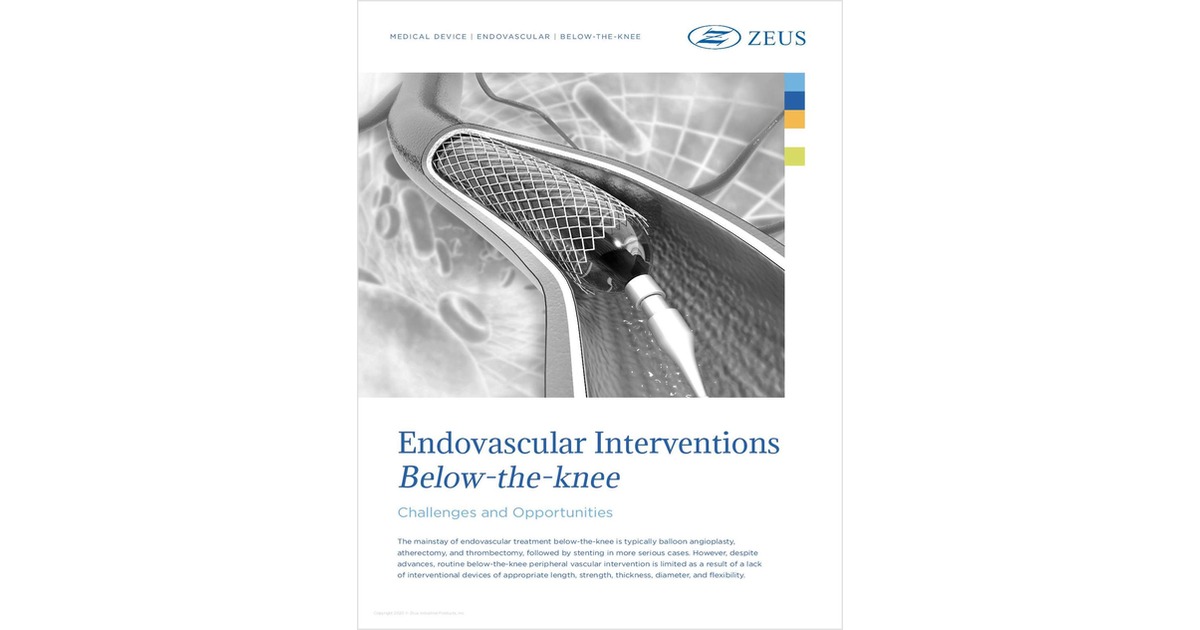
There’s increasing evidence to support endovascular intervention for patients with PAD below-the-knee. The challenge? Engineering a device that can safely and s...
Key Takeaways for Enterprise Leaders
Actionable strategies verified against enterprise industry benchmarks and real-world rollouts.
Statistical evidence and market data to support executive budgeting and strategic alignment.
Executive Abstract
Peer ReviewedGiven availability of both endovascular and open surgical options, a 2017 research program* used population-based data to demonstrate that an endovascular approach is associated with improved amputation-free survival over the long term with only a modest relative increased risk of subsequent intervention.
The mainstay of endovascular treatment to increase circulation blood flow is typically balloon angioplasty, atherectomy, and thrombectomy, followed by stenting in more serious cases. Recent advances have broadened the options for treating PAD, including the use of drug-eluting stents and drug-coated balloons to deliver effective therapies.
When compared with open surgery for PAD, catheter-based treatment offers a much lower periprocedural risk, but is limited by lower initial success, requiring repeated procedures for effective treatment, particularly for infrapopliteal (below-the-knee) intervention.
For example, blood vessels in the foot are smaller in diameter and highly tortuous, making them difficult to access and navigate. This, in addition to the fact that lesions in these body parts are often severely calcified, can mean repeated procedures are required for effective treatment. However, extensive infrapopliteal stenting in conjunction with poor outflow may actually elevate the risk of stent thrombosis or distal embolization complications.
It is clear that a reliable endovascular treatment for PAD in the lower extremities will be largely dependent on, and aided by, the availability of more advanced device design.
The challenge for engineers remains: creating a catheter that offers the right mechanical properties of strength and flexibility, and that is small enough for successful below-the-knee intervention.
Unlock Report Access
Provide your professional details for instant PDF access.
Related Research Publications
 Asset
Asset
5 Imperatives for Real Consumer Health Engagement
People are more than their condition or disease. They are moms, dads, and caregivers. They are professionals, unemployed, or retired. That's why health care nee...
 White Paper
How Effective Partnerships Support Exceptional, Cost-Effective Healthcare
The Role of Contract Partners in Helping Hospitals Adapt to a Changing Healthcare System American healthcare is undergoing a transformation. Changing demograph...
 Asset
Asset
5 Actionable Tactics to Increase Yield & Balance Costs in 2021
5 Actionable Tactics to Increase Yield & Balance Costs in 2021 Increasing patient payment yield is the goal of every healthcare company, but how can you accomp...